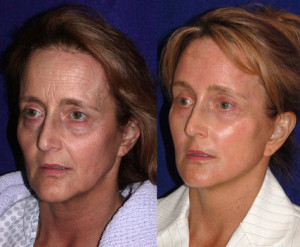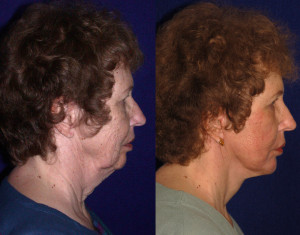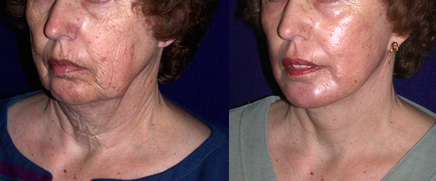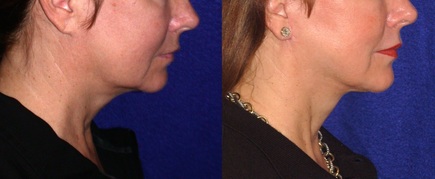

Lower Blepharoplasty Procedures in Utah
What is Blepharoplasty?
- Your eyes including your eyelids, are perhaps one of the first things people notice in you. This makes your eyes and eyelids one of the most important components for an appealing facial expression and aesthetic appearance. Any visible change in the shape or size of the orbital or periorbital region can spoil the look of your face.
- As you age and grow older, your eyelids may become ‘droopy’ or ‘baggy’ due to the stretching of your eyelid skin and gradually decreasing tone of your eyelid muscles. Your droopy eyelids and brow together cut a sorry figure for your face making you look tired, sleepy and haggard, further leading to eyelid or brow straining or both. In extreme cases, your saggy, baggy eyelids can even obstruct your vision, particularly peripheral vision causing difficulty in reading or driving.
- Blepharoplasty ensures cosmetic or functional corrections to the area around your eyes to enhance your look or to correct any abnormalities in function.
Defining Blepharoplasty
- The term blepharoplasty is derived from the Greek ‘blepharon’ which means ‘eyelid’ and ‘plassein’ which means ‘to form’. Simply put, blepharoplasty is a plastic surgical procedure that is used for correcting defects, deformities, and disfigurations of the eyelids, and more recently, it has been used for achieving aesthetic modification of the periorbital region of the face.
- Blepharoplasty has often been erroneously referred to as an ‘eyelift’ or “eyelid lift” as the procedure does not involve lifting of the eye or eyelids in any manner. It may be done to achieve either functional or cosmetic ends or a combination of both.
- Blepharoplasty involves removal or repositioning of excess tissue as well as reinforcement of surrounding muscles and tendons to reshape the upper eyelid, lower eyelid or both.
What are the Goals of Blepharoplasty?
- The goals of blepharoplasty include the functional restoration of affected eyelids and aesthetic restoration of the orbital and periorbital regions of the face.
- This is done by removing excess skin from the eyelids, smoothing the underlying eye muscles, tightening the supporting structures, and resecting and re-draping excess fat of the retroseptal area of the eye thus achieving a smooth anatomic transition from the lower eyelid to the cheek.
What are the Types of Blepharoplasty?
Based on desired results, blepharoplasty can be done either for functional or cosmetic purposes.
Functional or Reconstructive Blepharoplasty: This is performed to restore vision by removing excess skin, muscle and fat which blocks the visual axis. Following are the three essential elements of a functionalblepharoplasty:
- Patient should have noticeable visual improvement after skin elevation off their eyelids.
- A visual field test is done to document the loss of the superior field of vision.
- Photographs should clearly show upper eyelid skin laying across the eyelashes.
Cosmetic Blepharoplasty: The goal of cosmetic blepharoplasty is to accentuate the appearance of the eyes at the patient’s request and is not done to improve vision.
Anatomically, blepharoplasty can be performed on either the UPPER or LOWER eyelids, or BOTH eyelids.